
Read on to know the difference between invisalign dentist vs orthodontist, treatment costs, training, and how to choose the right provider for your smile!
A 2024 survey from the American Association of Orthodontists found that more adults are choosing clear aligners than ever before because they want straighter teeth without metal braces.
Many people now compare providers carefully before starting treatment because the wrong choice can lead to longer treatment times, bite problems, or extra costs later.
That’s one reason patients searching for the best Invisalign dentist NYC often spend time learning the difference between providers before making a decision.
When comparing Invisalign dentist vs orthodontist options, most people simply want safe treatment, predictable results, and a confident smile.
While both professionals can provide Invisalign treatment, their training, experience, and approach are not exactly the same.
Knowing those differences can help you choose the right provider for your specific dental needs.
Why Do People Get Confused About Invisalign Providers?
One of the biggest reasons people struggle with Invisalign dentist vs orthodontist decisions is because both can legally offer Invisalign treatment in many states.
A general dentist handles overall oral health, including:
- Cleanings
- Fillings
- Crowns
- Gum care
- Preventive treatment
- Cosmetic procedures
An orthodontist focuses almost entirely on correcting tooth and jaw alignment.
After dental school, orthodontists complete extra years of specialty training focused on tooth movement, bite correction, and jaw positioning.
That extra education matters more in difficult cases.
For someone with mild crowding or small gaps, a dentist may provide excellent Invisalign treatment.
But for severe bite problems, jaw alignment issues, or complicated tooth movement, an orthodontist may have more advanced experience.
What Does Invisalign Do?
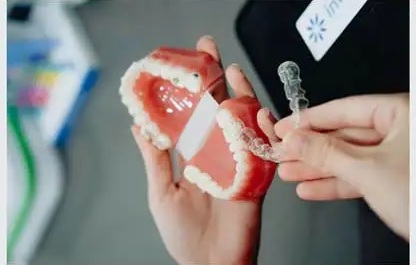
Invisalign uses clear plastic trays called aligners to move teeth into better positions over time slowly.
The process usually includes:
- Digital scans or impressions
- A custom treatment plan
- Multiple aligner trays
- Routine progress checks
- Retainers after treatment
The trays are usually changed every one to two weeks.
Each set makes small adjustments until the teeth reach the final planned position.
According to Align Technology, the parent company of Invisalign, millions of people worldwide have used clear aligners for orthodontic treatment.
Modern scanning technology and AI-based treatment planning have also improved treatment accuracy in recent years.
Still, successful treatment depends heavily on the provider planning the case correctly.
Training Differences Matter
The biggest difference in Invisalign dentist vs orthodontist comparisons comes down to education and daily experience.
General Dentist Training
A dentist completes:
- Undergraduate education
- Dental school
- Licensing exams
Some dentists also complete Invisalign certification courses and advanced cosmetic training.
Many experienced Invisalign dentists handle clear aligner cases every day and achieve excellent results.
Orthodontist Training
An orthodontist completes:
- Undergraduate education
- Dental school
- Two to three additional years of orthodontic residency
That residency focuses specifically on:
- Tooth movement
- Bite correction
- Jaw development
- Facial balance
- Complex alignment cases
Orthodontists also tend to see a higher volume of alignment cases regularly.
That does not automatically mean every orthodontist is better than every dentist.
Experience, technology, patient reviews, and treatment planning all matter too.
Which Provider Is Better for Simple Cases?
For mild to moderate alignment problems, many dentists successfully provide Invisalign treatment.
Simple cases may include:
- Small gaps
- Minor crowding
- Slight tooth shifting after braces
- Cosmetic straightening
In these situations, patients often choose dentists because they already trust them for routine care.
Some people also prefer having:
- Teeth cleanings
- Invisalign checks
- General dental care
all handled in one office.
Patients searching for an Invisalign specialist NYC often look for providers who combine cosmetic experience with modern digital scanning technology for smoother treatment planning.
Which Provider Is Better for Complex Cases?
Complex alignment issues often require more advanced orthodontic expertise.
These cases may include:
- Crossbites
- Severe crowding
- Jaw alignment issues
- Major overbites
- Underbites
- Teeth rotated significantly
Invisalign dentist vs orthodontist comparisons become more important when treatment difficulty increases.
Orthodontists are trained to manage cases where tooth movement affects the bite, jaw function, and facial balance.
They are also more likely to recognize complications early before they become bigger problems.
The American Association of Orthodontists notes that poorly managed tooth movement can lead to gum recession, bite issues, or uneven tooth wear.
That is why complicated cases should never be treated based only on price or advertising.
Does Invisalign Cost More With an Orthodontist?
Not always.
Many people assume orthodontists charge significantly more, but pricing often depends on:
- Case complexity
- Treatment length
- Office location
- Technology used
- Refinement trays needed
In large cities, treatment prices can vary widely even between providers with similar experience.
Patients searching for affordable Invisalign NYC often discover that financing plans, insurance coverage, and included retainers can make a bigger difference than the provider type itself.
Instead of focusing solely on the lowest price, consider what the treatment includes.
Ask about:
- Retainers
- Refinement trays
- Emergency visits
- Digital scans
- Follow-up appointments
A lower upfront price can lead to additional costs later.
Questions You Should Ask Before Choosing a Provider
Before starting treatment, schedule consultations and ask detailed questions.
Important questions include:
How many Invisalign cases have you treated?
Experience matters more than marketing claims.
Do you treat complex bite cases?
This helps you understand the provider’s comfort level.
Will I need attachments or refinements?
These affect treatment time and results.
What happens if my teeth do not track properly?
Some patients require adjustments during treatment.
How long will treatment realistically take?
Clear expectations reduce frustration later.
When reviewing Invisalign dentist vs orthodontist providers, look carefully at before-and-after photos, patient reviews, and treatment explanations, rather than focusing solely on social media promotions.
Technology Also Plays a Big Role
Modern Invisalign treatment relies heavily on digital tools.
Many top providers now use:
- 3D digital scanning
- AI-assisted treatment planning
- Digital smile simulations
- Remote progress monitoring
Technology improves comfort and accuracy while reducing messy impressions.
Patients searching online for Invisalign near me NYC often prioritize offices that offer digital scanning because the process feels faster and more comfortable.
Still, technology alone does not replace skill.
Even advanced software depends on proper treatment planning from the provider using it.
Red Flags to Watch Out For

Some warning signs should make you pause before starting treatment.
Be careful if a provider:
- Promises unrealistically fast results
- Avoids discussing risks
- Gives very limited consultation time
- Offers extremely low prices without details
- Does not evaluate your bite carefully
- Skips X-rays or scans
Good Invisalign treatment requires planning, monitoring, and follow-up care.
Straight teeth should also function properly when you bite and chew.
So, Who Should You Choose?
There is no one-size-fits-all answer.
For mild cosmetic changes, an experienced Invisalign dentist may be a great choice.
For complicated bite or alignment problems, an orthodontist may provide more specialized care.
The best decision usually comes from balancing:
- Experience
- Case difficulty
- Technology
- Communication
- Patient trust
- Treatment goals
Many people researching Invisalign dentist vs orthodontist providers realize that comfort and confidence in the provider matter just as much as credentials.
Conclusion
Choosing between a dentist and an orthodontist for Invisalign treatment should never feel rushed.
Both professionals can provide successful results, but the right choice depends on your smile needs, bite condition, and treatment goals.
If your case is simple, a skilled dentist with strong Invisalign experience may be all you need.
If your alignment issues are more advanced, an orthodontist’s specialized training could make a major difference in the outcome.
Take time to compare consultations, ask detailed questions, and carefully review real treatment results.
A straighter smile is a long-term investment, and choosing the right provider from the start can save you time, money, and frustration later.